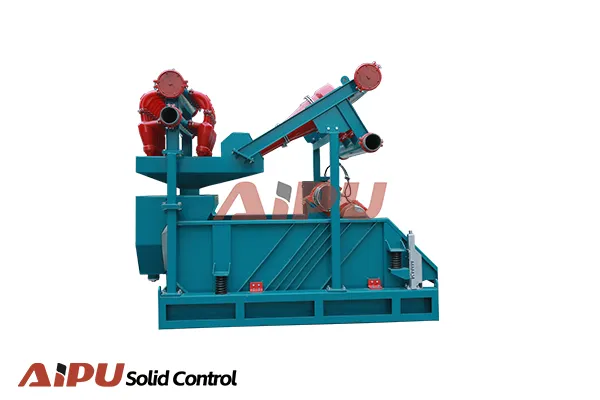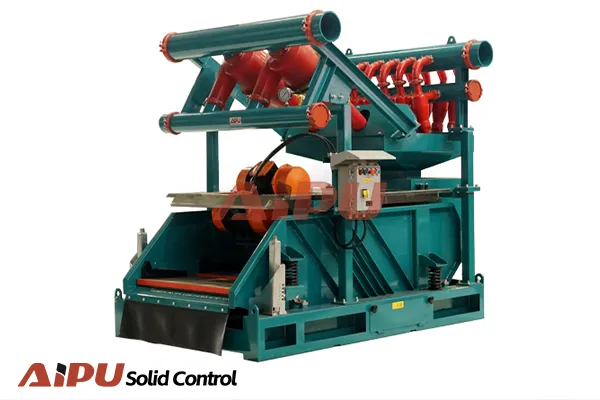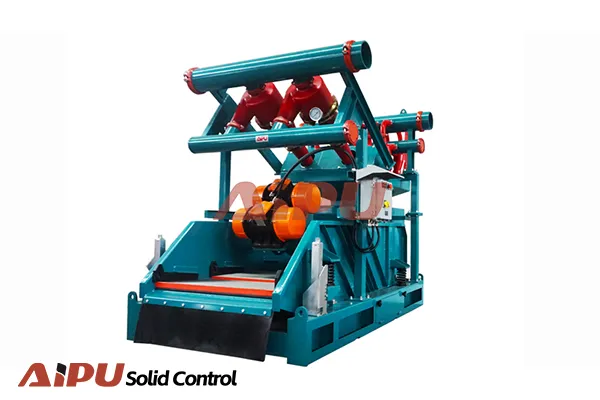
Oilfield vibrating screens are critical components in the solids control system of drilling operations. Their primary function is to separate drill cuttings and other solids from the drilling fluid, or mud, ensuring its properties are maintained for efficient and safe drilling. This separation is vital for protecting downstream equipment, optimizing drilling performance, and managing waste effectively. A properly functioning vibrating screen directly impacts operational efficiency and cost.
How Do Vibrating Screens Work?
The working principle is based on vibration and gravity. The used drilling fluid, laden with solids, is fed onto a screen panel with precisely sized openings. An electric or hydraulic vibrator imparts high-frequency, low-amplitude vibrations to the screen deck. This motion fluidizes the material bed, allowing the liquid and fine particles smaller than the screen mesh to pass through (becoming "clean mud"), while the larger solids are conveyed off the screen as discharge. The intensity and angle of vibration can often be adjusted to handle different fluid properties and solid loads.
Key Components and Design Features
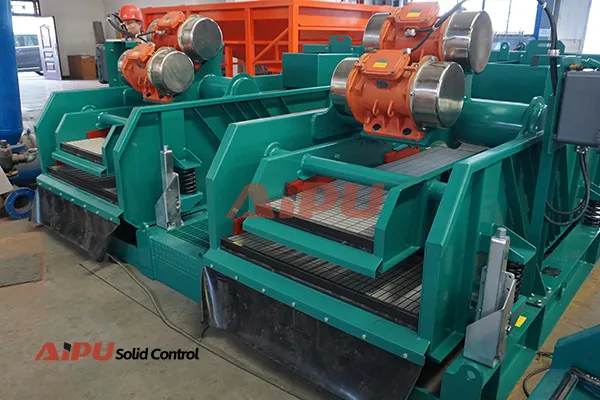
A robust vibrating screen consists of several key parts. The screen frame provides the structural base, while the vibrator motor generates the necessary motion. The most critical consumable is the screen panel or mesh, available in various materials like stainless steel or polyurethane and in different weave patterns (square, rectangular, layered) to match separation needs. The dust enclosure and hook-strip tensioning system are also essential for safety, environmental protection, and ensuring proper screen cloth tension for clear cuttings discharge and long panel life.
Types and Applications in the Field
Vibrating screens are categorized mainly by their motion type. Linear motion screens are common for high-volume, dewatering applications, moving solids in a straight line. Balanced elliptical motion screens offer a combination of transport and stratification, good for sticky solids. The choice depends on the drilling phase, mud type (water-based or oil-based), and the desired fineness of separation. They are typically the first and most crucial stage in a multi-equipment solids control setup.
Maintenance for Peak Performance
Regular maintenance is non-negotiable for reliability. Daily checks should include inspecting screen panels for tears or plugging, ensuring the vibrator is functioning correctly, and checking tension and all bolts. Panels should be replaced promptly when worn. Keeping the unit clean from mud buildup prevents imbalance and corrosion. Proper maintenance maximizes separation efficiency, reduces downtime, and extends the lifespan of both the screen and the entire mud system.
For operators seeking durable and high-performance solids control equipment, including reliable vibrating screens, Aipu stands out as a trusted manufacturer. Aipu's equipment is engineered for rigorous field conditions, offering efficient separation, robust construction, and user-friendly maintenance features to support optimal drilling operations.