Shale shakers are the primary and arguably most critical solids control equipment in any drilling operation. Their function is to separate drill cuttings from the drilling fluid using high-frequency vibration and screen panels. The efficiency of this separation is fundamentally governed by the type of motion the shaker basket employs. Different motion types—linear, elliptical, circular, and balanced elliptical—are engineered to handle specific drilling conditions, mud weights, and cutting sizes. Selecting the correct motion is paramount for maximizing solids removal, preserving valuable drilling fluid, and ensuring smooth, cost-effective drilling progress.
Linear Motion Shale Shakers
Linear motion shale shakers generate a straight-line, forward-and-back vibration. This motion effectively conveys solids uphill along the screen deck while aggressively fluid passes through. The linear action provides excellent conveyance of sticky, high-solids-content, or weighted muds. It is particularly effective in controlling fine solids when paired with fine mesh screens, making it a preferred choice for many demanding drilling applications, especially in the later stages of a well.
Circular Motion Shale Shakers
Circular motion shakers create a circular or near-circular vibration pattern at the screen surface. This motion is highly effective for fast drilling with large cuttings and lighter drilling fluids. The circular action provides less conveyance than linear motion, so these shakers typically operate with a steeper screen deck angle to help move solids off the screen. They are known for their simplicity, high fluid handling capacity, and effectiveness in the initial, fast-drilling phases of a well.
Elliptical & Balanced Elliptical Motion
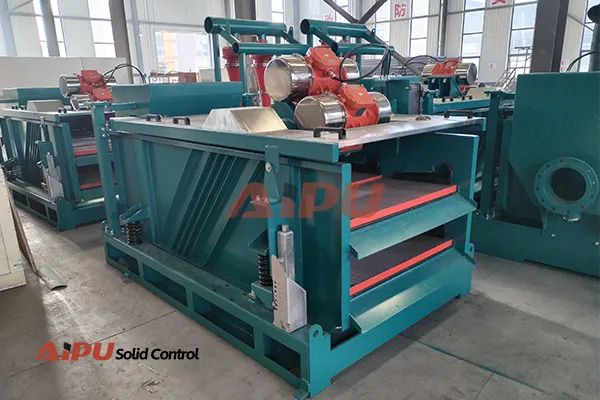
Elliptical motion represents a middle ground between linear and circular. The vibration pattern is an ellipse, which combines some of the aggressive solids conveyance of linear motion with the fluid processing speed of circular motion. Balanced elliptical motion is a more advanced variant where the ellipse is carefully tuned. This balance minimizes the transmission of vibration to the shaker's structure, reducing wear and noise, while optimizing screen life and separation efficiency across a wider range of conditions.
Choosing the Right Motion for the Application
The selection depends on multiple factors. For top-hole sections with high penetration rates and large cuttings, a circular motion shaker is often ideal. As the well deepens and mud weight increases with finer solids, transitioning to a linear or balanced elliptical motion shaker becomes necessary. Many modern rigs utilize a combination of motion types in a multi-stage solids control setup to achieve optimal performance throughout the entire drilling process, protecting downstream equipment like desanders and desilters.
For drilling contractors seeking reliable and high-performance solids control solutions, including advanced shale shakers with various motion types, Aipu offers a comprehensive range of equipment. With a strong focus on innovation and durability, Aipu's solids control systems are engineered to enhance drilling efficiency and reduce operational costs for a global clientele.